
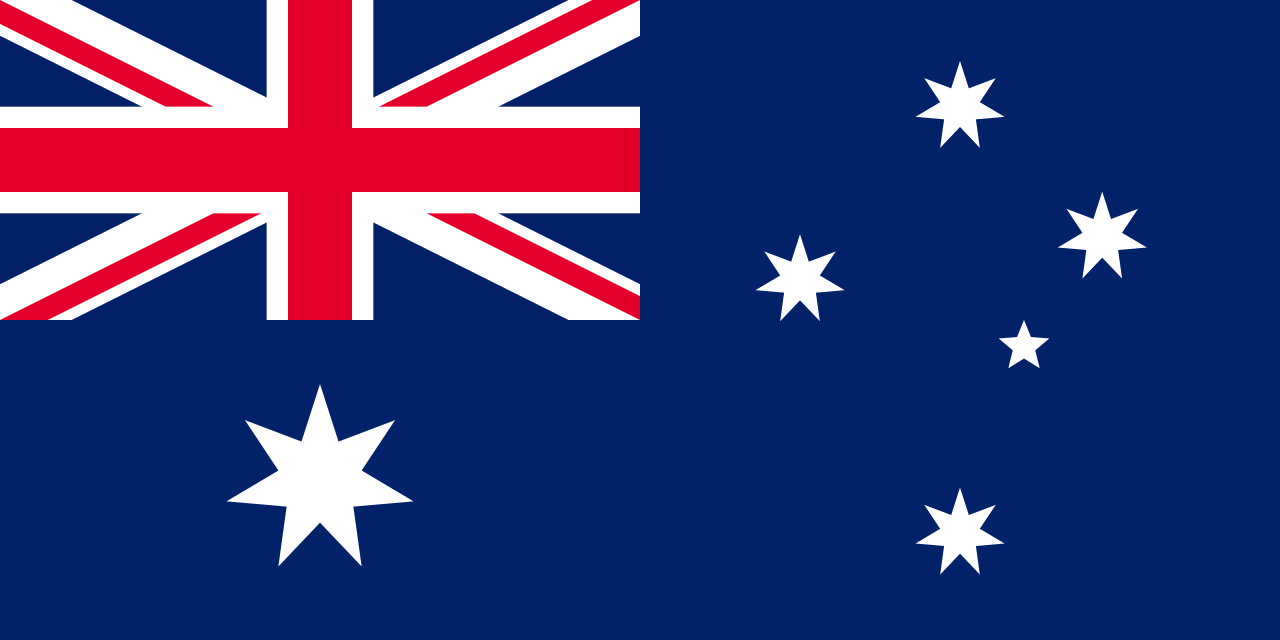
Australia
Commonwealth of Australia
- Capital: Canberra
- Australia and New Zealand
- 0 neighbours in Travle
Australia overview
Australia is in Australia and New Zealand, Oceania. Its capital is Canberra. The World Bank counts about 27.6 million people for 2025 on 7,741,220 km² of surface area. The IANA time zone database lists 12 zones for it.
Australia has no land border, either in Natural Earth's boundary data or in the Travle map, so no route in the game can start or end there.
Population, density and language
The World Bank counts 27,614,411 people in Australia for 2025, which is 55th of 170 by population. Spread over 7,741,220 km² of surface area (2024), that is about 3.6 people per km², 166th of 169 by density.
Source: World Bank, World Development Indicators (SP.POP.TOTL), data updated 2026-10-08; checked 2026-10-19.Rankings compare the entries in Travle's country list that have World Bank data (170 with population, 169 with surface area). Some list entries are territories, so a rank here is not a rank among sovereign states.
| Language | Share (est.) | Status |
|---|---|---|
| English | 96% | official (de facto) |
| Traditional Chinese | 2.1% | — |
| Italian | 1.9% | — |
| Warlpiri | 0.0093% | — |
| Hmong Njua | 0.0082% | — |
CLDR shares are estimates of people who use each language, so they can add up to more than 100%.
How big is Australia, really?
With 7,741,220 km² (2024, land plus inland water), Australia is 6th of 169 by surface area and covers 5.51% of the combined area of those entries.
In that ordering, Brazil (8,510,420 km²) is just larger; India (3,287,263 km²) just smaller.
Source: World Bank, World Development Indicators (AG.SRF.TOTL.K2), data updated 2026-10-08; checked 2026-10-19.Australia at a glance
- Capital
- Canberra
- Region
- Australia and New Zealand, Oceania
- Population
- 27,614,411 (2025)
- Surface area
- 7,741,220 km² (2024)
- Density
- 3.6 people per km²
- Official languages
- English (de facto)
- Currency
- Australian Dollar (AUD)
- Calling code
- +61
- Internet domain
- .au
- Land neighbours
- 0 (Natural Earth) · 0 (Travle)
Each figure is sourced in its own section below. "Not available" means no source used on this page has the figure.
Australia within Australia and New Zealand
Natural Earth places Australia in Australia and New Zealand (UN subregion). Of the 2 entries from Travle's country list in that subregion, Australia is 1st by population and 1st by surface area, with 83.8% of the combined population of those entries.
| Country | Population (2025) | Area km² (2024) |
|---|---|---|
| Australia | 27,614,411 | 7,741,220 |
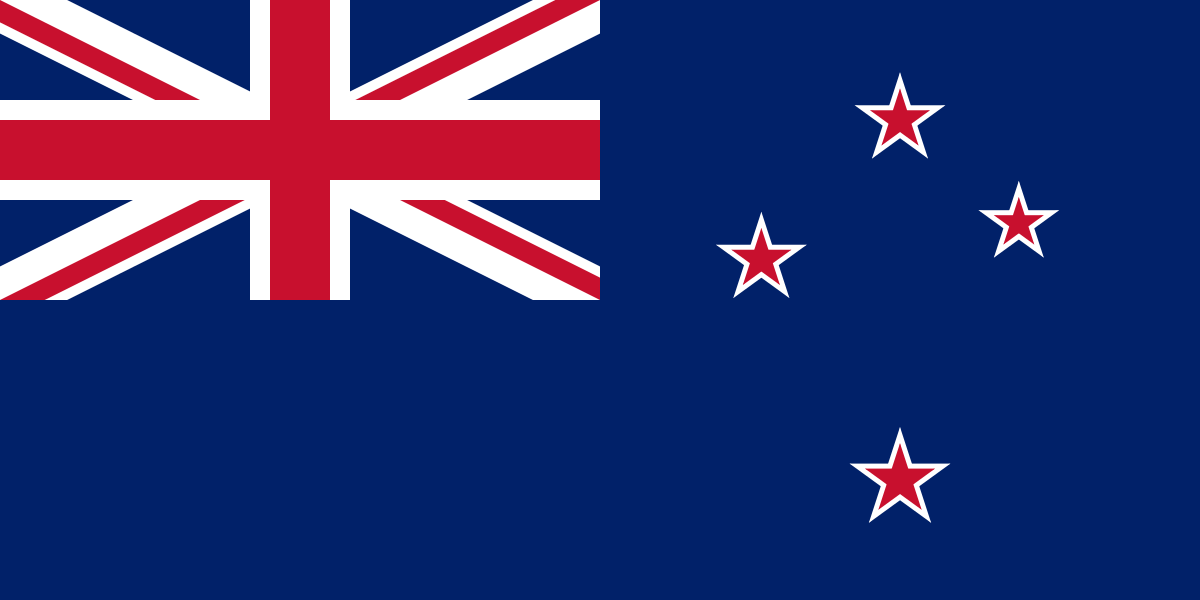 New Zealand | 5,324,700 | 267,710 |
Sources: World Bank WDI (SP.POP.TOTL, AG.SRF.TOTL.K2), data updated 2026-10-08; subregion from Natural Earth 1:110m. A dash means the World Bank has no figure.
Location, borders and position
Australia is in Australia and New Zealand, Oceania. Its outline in Natural Earth lies in the southern hemisphere and the eastern hemisphere. Its capital, Canberra, is at about 35.3° S and 149.1° E.
On land, Natural Earth's boundary data gives Australia 0 neighbours; the Travle game map gives it 0.
Sources: Natural Earth 1:110m (outline and capital) and 1:10m boundary lines (neighbours), public domain.
Where Australia is on the map
Countries bordering Australia
Without land neighbours there is nothing to compare between geography and the game.
Geographic column: Natural Earth 1:10m Admin-0 boundary lines (land) 5.1.0 (public domain), checked 2026-10-19; Natural Earth shows de facto boundaries and does not settle disputes. Travle column: the game's own border map.
Money and language in Australia
Currency
- Australian Dollar: code AUD, numeric 036. ISO 4217 lists it for 8 entries in total, so it is shared with 7 others.
Official languages
- English (de facto): official in 91 territories in CLDR, including Australia.
CLDR is a technical reference, not a legal text. Laws and constitutions can describe languages differently.
Currency, domain and dialling code
- Currency
- Australian Dollar (AUD)
Source: Unicode CLDR release-48-2 currencyData (region AU); code, name and number from ISO 4217 list one (SIX), published 2026-09-17; checked 2026-10-19. - Internet domain
- .au
Source: IANA Root Zone Database; checked 2026-10-19. - International dialling code
- +61
Source: ITU, List of ITU-T Recommendation E.164 assigned country codes (position on 15 December 2016); checked 2026-10-19. - Time
- 12 zones in the IANA database; offsets range from UTC+08:00 to UTC+11:00 in 2026
IANA zones: Australia/Lord_Howe, Antarctica/Macquarie, Australia/Hobart, Australia/Melbourne, Australia/Sydney, Australia/Broken_Hill, Australia/Brisbane, Australia/Lindeman and 4 more
Source: IANA Time Zone Database 2026e (zone.tab); UTC offsets computed for 15 Jan and 15 Jul 2026 with Node.js ICU tz 2026a; checked 2026-10-19.
Australia codes and abbreviations
| Standard | Code |
|---|---|
| ISO 3166-1 alpha-2 | AU |
| ISO 3166-1 alpha-3 | AUS |
| ISO 3166-1 numeric | 036 |
| ISO 4217 currency (Australian Dollar) | AUD · 036 |
| Country-code top-level domain | .au |
| ITU-T E.164 country code | +61 |
Sources: Natural Earth (ISO 3166-1), ISO 4217 list one (SIX), IANA Root Zone Database, ITU E.164 list; linked with dates in the sections above.
Fun facts about Australia
- Only 5 entries are larger by surface area in Travle's country list.
- With about 3.6 people per km², it is among the ten least densely populated entries in that list.
- It has the largest population of the 2 entries in Australia and New Zealand from Travle's country list.
- English has official status in 91 territories in Unicode CLDR, Australia among them.
- The IANA time zone database lists 12 zones for Australia.
- Australia has no land border at all, so no route in Travle leads to it.
- The Australian Dollar is listed for 8 entries in ISO 4217.
- UNESCO lists 21 World Heritage properties in Australia; the earliest inscription dates from 1981.
Each fact is calculated from the sources cited on this page.
How far can you travel from Australia in Travle?
Because Australia has no land neighbours in the game's map, no country can be reached from it and no route leads to it.
More countries in Australia and New Zealand
World Heritage in Australia
UNESCO lists 21 World Heritage properties in Australia: 12 natural, 5 cultural and 4 mixed. The first 3 were inscribed in 1981.
- Great Barrier Reef (natural, inscribed 1981)
- Kakadu National Park (mixed, inscribed 1981)
- Willandra Lakes Region (mixed, inscribed 1981)
- Lord Howe Island Group (natural, inscribed 1982)
- Tasmanian Wilderness (mixed, inscribed 1982)
- Gondwana Rainforests of Australia (natural, inscribed 1986)
- Uluru-Kata Tjuta National Park (mixed, inscribed 1987)
- Wet Tropics of Queensland (natural, inscribed 1988)
- Shark Bay, Western Australia (natural, inscribed 1991)
- K’gari (natural, inscribed 1992)
- Australian Fossil Mammal Sites (Riversleigh / Naracoorte) (natural, inscribed 1994)
- Heard and McDonald Islands (natural, inscribed 1997)
Showing the 12 earliest of 21. The full list is on the UNESCO website.
Source: UNESCO World Heritage List (XML feed); checked 2026-10-19. Names as listed by UNESCO; descriptions on this page are our own.
Australia — frequently asked questions
What is the capital of Australia?
Canberra.
Does Australia border any country?
No. Neither Natural Earth's boundary data nor the Travle map gives it a land neighbour.
What currency and language does Australia use?
The currency is the Australian Dollar (AUD). Unicode CLDR gives English official status.
How many people live in Australia?
The World Bank counts 27,614,411 people for 2025.
How big is Australia?
7,741,220 km² of surface area (2024), according to the World Bank.
What is the dialling code and internet domain of Australia?
The international dialling code is +61 and the country-code domain is .au.
What time zone does Australia use?
12 zones in the IANA database; offsets range from UTC+08:00 to UTC+11:00 in 2026.
Keep exploring
- Spin the country wheel to get a random country.
- Play Travle and try to cross the map border by border.
- Browse all countries of the world, countries by population, capitals, country codes or try the flag quiz.